

Steven Spielberg’s Catch Me If You Can ends with one of cinema’s most romantic images: a young Frank Abagnale Jr., the teenage con artist who flew planes, wore a doctor’s coat, and cashed millions in forged checks, finally settling down with the devoted fiancée he risked everything to return to. There is just one problem with that ending. The fiancée isn’t real. Kelly Anne Welbes Abagnale — the actual woman Frank Abagnale married — never appears in the film, and her real story is far more interesting than the one Hollywood invented.
The real story starts in Houston, Texas, in the mid-1970s, not with a nurse and a dramatic airport arrest but with an undercover assignment, a borrowed identity, and a confession in a park. Frank met Kelly while he was working for the FBI after prison — broke, using another name, and still trying to figure out who he was when he wasn’t pretending to be someone else. He told her everything: the real name, the criminal past, the government job. She didn’t leave. She married him on November 6, 1976, and she has been married to him for nearly fifty years.
In this article, we piece together what is actually verifiable about the most important person in Frank Abagnale’s life: where she came from, the two different accounts of how they met, what Frank himself has said about the debt he owes her, their three sons, and why — in an era when everyone connected to a famous man monetizes the connection — she chose a life of near-total privacy.
Quick Bio
| Full Name | Kelly Anne Welbes Abagnale |
| Known For | Wife of Frank Abagnale Jr., the former con artist whose life inspired Catch Me If You Can |
| Birth Date | Reported as June 26, 1954 (no first-person confirmation from Kelly herself) |
| Age | 72 (as of 2026, if the reported birth date is correct) |
| Birthplace | Reported as Galveston, Texas; she was raised in Houston, Texas |
| Nationality | American |
| Parents | Louis Andrew Welbes (U.S. Army engineer) and Maxine Cecilia Rust Welbes (Rice University professor), per secondary biographical sources |
| Siblings | Two brothers, reported as Tim and Robert Welbes |
| Education | Reported to hold a master’s degree in child psychology |
| Spouse | Frank Abagnale Jr. (married November 6, 1976) |
| Children | Three sons: Scott, Chris, and Sean Abagnale |
| Residence | Daniel Island, Charleston, South Carolina |
| Current Status | Married; living a private life, no public interviews or social media presence |
Who Is Kelly Anne Welbes Abagnale?
Kelly Anne Welbes Abagnale is the woman who married the most famous impostor in American history and spent the next five decades making sure he never had to become one again. Her husband, Frank Abagnale Jr., is the former teenage con artist whose exploits — impersonating a Pan Am pilot, a doctor, and a lawyer, cashing millions in forged checks before he was old enough to drink — became the bestselling book and the 2002 Spielberg film Catch Me If You Can.
Kelly’s role in that story is easy to state and hard to overstate: she is the person Frank himself credits with turning his life around. In interviews over the years, he has said flatly that his wife had the biggest influence on his life — that knowing he could harm, embarrass, or be separated from her was what kept him from ever going back. Everything about Frank Abagnale the respected security consultant, author, and fraud-prevention expert exists downstream of that marriage.
And yet she has given no interviews about any of this. She has written no memoir, sold no story, and maintained no public profile. What follows is built from what others have said — Frank, family records cited by biographers, and the rare public appearances — because Kelly Anne Welbes Abagnale has chosen, consistently and completely, to be known by her family rather than by the public.
The Woman the Movie Left Out
If you have only seen the film, you know Amy Adams as Brenda Strong, the sweet nurse Frank promises to marry. Here is what the movie doesn’t tell you: Brenda Strong is not a real person. Frank himself has confirmed that the character was invented for the film, loosely inspired by an Eastern Airlines flight attendant he dated while living in Louisiana during his criminal years — a relationship he has said was never an engagement, since he was too young to be thinking about marriage.
The film ends where Kelly’s story begins. Catch Me If You Can closes on Frank’s criminal years, ending before 1974; he met Kelly in the mid-1970s, after his release from prison. The same is true of the Broadway musical adaptation, which never reaches her either. Hollywood told the story of the con artist. The story of the man who stopped being one — and the woman who made that possible — was never filmed.
That absence matters because it created a persistent public confusion. Search results still mix the fictional fiancée with the real wife, and more than one article has had to correct the record: Kelly Anne Welbes is the real woman Frank married, and the movie never showed her. The real love story of Frank Abagnale’s life happened off camera, after the credits, and it has lasted nearly fifty years — roughly ten times longer than his entire criminal career.
An Ordinary Texas Upbringing
Kelly Anne Welbes was born in 1954 — reported as June 26 in Galveston, Texas — and raised in Houston. The biographical accounts that exist describe an upbringing defined by education, discipline, and unremarkable stability, a striking contrast to the life her future husband had lived by the same age.
Her parents, according to those accounts, were Louis Andrew Welbes and Maxine Cecilia Rust Welbes. Louis served as an engineer in the U.S. Army, including during World War II; he died on May 4, 2004, at the age of 87. Maxine was a college professor — biographers identify her as a professor at Rice University — who after retirement volunteered for 13 years at Memorial Hermann Northwest hospital; she died on December 18, 2008, at 86. The two had been married for more than six decades. Kelly reportedly grew up alongside two brothers, Tim and Robert.
A note of honesty is required here, as with everything about Kelly: these details come from secondary biographical sources, not from her. She has never publicly confirmed her parents’ names, her schooling, or her upbringing. The family details that can be independently checked — like Frank’s own public tribute to his mother-in-law Maxine after her death, in which he praised her strength and thanked her for the way she raised her daughter — carry more weight than the rest, and they point in the same direction: a grounded, education-minded Texas family.
Kelly is reported to have attended Waltrip High School in Houston, where she played on the tennis team, and to have gone on to earn a master’s degree in child psychology. Whether the degree is precisely documented matters less than what it reflects: every account of her early life describes a young woman oriented toward care, stability, and other people — the opposite, in every way, of the drifting, identity-shifting teenager she was about to meet.
How She Met Frank: Two Accounts, One Meeting
The meeting is the hinge of the whole story, and Frank himself has told it more than once. The most direct version comes from an interview he gave to author Paul Stenning: he met Kelly while working undercover for the FBI in the Houston area in the mid-1970s, when she was working as a cashier at a grocery store. By then he had served prison time in France, Sweden, and the United States, and had been released on the condition that he help federal authorities fight the very fraud he once committed.
A second, widely repeated account says they met at an orphanage in Houston, where Kelly was interning while studying child psychology and Frank was posing — this time legitimately, on assignment — as a social worker. The two versions share the essential shape: an ordinary young Texas woman, a government job performed under another name, and a man still navigating the wreckage of his past.
Neither account has been confirmed by Kelly herself, and the responsible reader should treat the details accordingly. What is consistent across every version is what happened next: when the assignment ended, Frank took Kelly to a park and told her everything. His real name. His criminal history. His current work for the FBI. He asked her to believe in the man sitting next to her rather than the record behind him. She said yes — and, according to Frank, she said it against the wishes of her parents, who knew exactly who he had been.
The Confession in the Park
It is worth sitting with that scene for a moment, because it is the moral center of the Abagnale story. Frank Abagnale had spent his youth as the most gifted liar of his generation — a teenager who talked his way into cockpits and operating rooms. The one person he could not afford to con was the one he chose to tell the whole truth to, before she had any obligation to stay.
Frank has described that decision as the turning point of his life. In a widely quoted interview, he said he met his wife on an undercover assignment after leaving prison, told her who he really was when it was over, and asked her to marry him against her parents’ wishes — adding that he didn’t have a dime to his name at the time, but she believed in him, didn’t judge him for his past, and gave him three sons. Her love and trust, he said, is what turned his life around.
Kelly and Frank married on November 6, 1976, in a small private ceremony with close family and friends. She was 22; he was 28. As of this year, they have been married for nearly five decades — a marriage that began with a confession most people would have walked away from, and that has outlasted nearly every celebrity marriage, most careers, and the entire public memory of Frank Abagnale’s crimes.
The Anchor of the Redemption
Frank Abagnale has never been ambiguous about who gets the credit for his transformation. In a 2015 interview with the Charleston City Paper, he said plainly that his wife had the biggest influence on his life — that the knowledge that wrongdoing could harm her, embarrass her, or take him away from her was what kept him straight. Happiness, he added in the same interview, comes from finding the right person to marry and build a family with, whether you’re a mechanic or a doctor.
This is the part of the story that the con-artist legend tends to swallow. Abagnale’s reinvention is usually told as a tale of genius redirected — the forger who became the fraud-fighter, the man who advised the FBI and wrote the books and gave the speeches. But the genius was never the problem; the problem was the lying, and the cure for the lying was not a job. It was a person. Frank got the consulting firm, the AARP ambassadorship, the respectability. Kelly got the private satisfaction of having been believed — and of having been right.
There is a symmetry in it that she has never commented on publicly. The world’s most famous con man needed exactly one person he could not con, and he found her working behind a grocery counter — or in a Houston orphanage, depending on the account — at the precise moment he was done pretending.
Three Sons and Twenty-Five Years in Tulsa
Kelly and Frank raised three sons: Scott, Chris, and Sean Abagnale. They raised them deliberately far from the noise of Frank’s notoriety, settling in Tulsa, Oklahoma, where the family lived for roughly 25 years. The choice of Tulsa was, by all accounts, intentional — a place where the boys could grow up with ordinary childhoods, insulated from the myth of their father.
The sons took strikingly different paths. Scott, the eldest, followed the family story’s strangest arc: he became an FBI agent, rising to Supervisory Special Agent in the Bureau’s Crisis Negotiations Unit — the son of America’s most famous con artist, now working for the agency that once hunted his father. He has appeared publicly with the family and is married with two children.
Chris, the second son, built a career in fashion and co-owns House of Sage, a clothing boutique in Charleston, South Carolina, with his wife. Sean, the youngest, has kept the lowest profile of the three; biographical accounts have variously linked him to educational work and software, but his life, like his mother’s, is largely his own. What matters more than the career details is the evident outcome: three adults raised in stability by two parents who insisted on it.
Once the boys were grown and gone, Frank and Kelly left Tulsa. In 2010 they settled on Daniel Island in Charleston, South Carolina, where they still live. For more profiles of the families behind famous names, browse our Celebrity section.
Life Away From the Spotlight
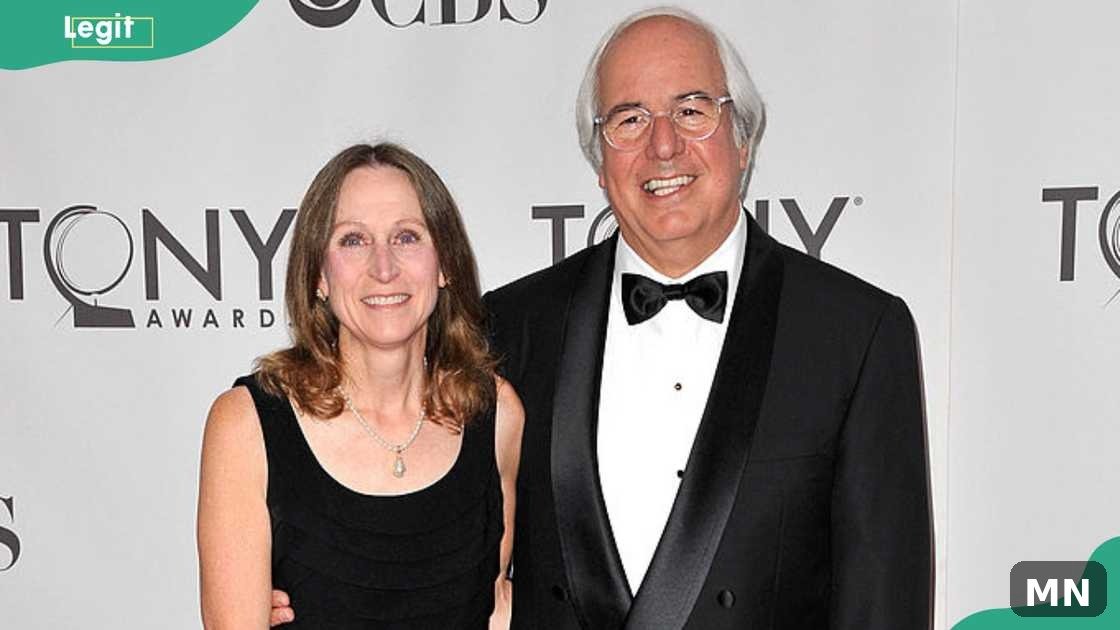
For a woman married to a man whose life became a Spielberg film, Kelly Anne Welbes Abagnale has achieved something close to invisibility — by choice. She has never given a public interview about her life, her marriage, or her husband’s past. She has no public social media presence. When the family appears in public, it is usually Frank alone at a conference or speaking event; Kelly’s rare photographed appearances — at a Broadway opening-night party, at an awards event — are the exceptions that prove the rule.
That privacy is not an accident of a pre-internet life; it is a maintained position. Content sites have published her supposed height, eye color, and weight with the usual unsourced confidence — details no trustworthy source has ever confirmed from her, and which a serious profile has no business asserting as fact. The internet wants a dossier; she has declined to provide one.
There is a dignity in that refusal that echoes Frank’s own story. He spent his youth inventing identities for strangers. She has spent her adult life refusing to perform one for them. Between the two of them, they seem to have agreed long ago on where the performance ends and the life begins.
Frequently Asked Questions
Who is Kelly Anne Welbes Abagnale?
Kelly Anne Welbes Abagnale is the wife of Frank Abagnale Jr., the former con artist whose life inspired the book and film Catch Me If You Can. They married on November 6, 1976, and have three sons together. She is widely credited — by Frank himself — with being the central influence in his transformation from criminal to respected security consultant.
How did Kelly Anne Welbes meet Frank Abagnale?
They met in the mid-1970s in Houston, Texas, while Frank was working undercover for the FBI after his release from prison. Frank has said she was working as a cashier at a grocery store; another account says they met at an orphanage where she was interning. When the assignment ended, he told her his real identity and criminal past, and she chose to stay.
Was Kelly Anne Welbes in Catch Me If You Can?
No. The film ends before Frank met Kelly — it covers only his criminal years. The fiancée character in the film, Brenda Strong, is fictional; Frank has confirmed she was loosely inspired by a flight attendant he once dated, and that they were never engaged.
How many children do Kelly Anne and Frank Abagnale have?
Three sons: Scott, Chris, and Sean Abagnale. Scott became an FBI Supervisory Special Agent; Chris co-owns a fashion boutique in Charleston, South Carolina; Sean has kept a private life.
Where do Kelly Anne and Frank Abagnale live now?
They live on Daniel Island in Charleston, South Carolina, where they moved in 2010 after raising their sons in Tulsa, Oklahoma, for about 25 years.
How long have Kelly Anne and Frank Abagnale been married?
They married on November 6, 1976, so as of 2026 they have been married for nearly 50 years.
Bottom Line
Kelly Anne Welbes Abagnale never wanted to be part of a famous story, and in a real sense she never was — she was the reason the story changed. The con artist needed an audience; the husband needed a witness. She was the one person who knew exactly who Frank Abagnale had been and chose him anyway, and then spent five decades making sure the choice kept being true.
Hollywood gave the world Brenda Strong, a fiction. The real woman was at a grocery counter in Houston, or in an orphanage hallway — ordinary places where extraordinary trust began. Nobody films the fifty years after the confession. But that is where the redemption actually happened, and Kelly Anne Welbes Abagnale was there for every year of it.
