

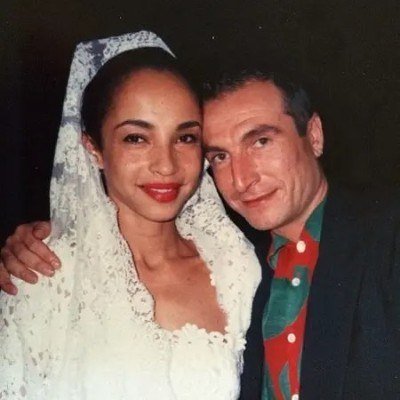
Carlos Scola Pliego occupies one of the strangest corners of celebrity biography: he is famous almost entirely for a marriage that ended three decades ago, to one of the most private singers in music history. From 1989 to 1995, he was the husband of Sade Adu — the only husband, in fact, the Nigerian-British soul icon has ever had.
But there is much more to the story than the marriage certificate. Pliego was a real working filmmaker in Spanish and international cinema, with credits on a James Bond production, an Oscar-adjacent European film slate, and two documentaries he wrote and directed himself in the mountains and plains of Africa. His filmography is far more interesting than his marriage — yet almost no article about him has bothered to tell it straight.
This is the most accurate account of Carlos Scola Pliego anywhere online: the verified credits, the debunked internet myths (including a completely invented $70 million net worth and a birthday nobody can source), and the real story of his six years with Sade. Where facts cannot be verified, we say so — and that honesty alone puts this article ahead of nearly everything else written about him.
| Full Name | Carlos Scola Pliego |
| Credited As | Carlos Scola and Carlos Scola Pliego |
| Known For | Spanish filmmaker; only husband (to date) of singer Sade Adu |
| Birth Year | Never publicly confirmed — some unverified sites claim 1955 |
| Age | Not publicly known |
| Birthplace | Spain (some low-quality sources wrongly claim the US) |
| Nationality | Spanish |
| Profession | Assistant director, script supervisor, writer-director of documentaries |
| Spouse | Sade Adu (married 1989, divorced 1995) |
| Children | None publicly documented |
| Net Worth | No evidence-based public estimate exists |
| Current Status | Living privately; no verified public activity documented in recent years |
Who Is Carlos Scola Pliego?
Carlos Scola Pliego is a Spanish film professional whose working career stretched from the late 1970s into the mid-2000s, and whose name the world knows because he married Sade Adu in 1989. The official Sade biography identifies him as a Spanish film director and confirms the marriage; film-industry records, particularly IMDb’s consolidated filmography, supply the clearest picture of his actual work.
His career had two phases. In the first, he was a behind-the-camera craftsman — a script supervisor and assistant director on Spanish and international productions through the 1980s. In the second, brief but notable, he became a writer-director of two documentaries set in Africa, the only credits in which he is the sole director. For more behind-the-scenes stories of the film world’s quiet professionals, browse our celebrity stories.
A Real Filmography, Not a Rumor
Here is the verified working record that most articles about Pliego skip entirely. He began in 1979-1980 as a script supervisor on La boda del señor cura and Opera Prima, the kind of continuity job that keeps a production coherent and that only meticulous people get hired for.
From 1981 to 1985 he worked as an assistant director on nine productions — a serious run. The standouts: the 1983 James Bond film Never Say Never Again, where he served as an assistant director handling Spanish production logistics, and the 1985 television miniseries Christopher Columbus. His assistant-directing credits also include Curse of the Pink Panther and Eleni, the latter starring John Malkovich.
Two corrections matter here, because sloppy coverage keeps repeating them. First: he did not direct a James Bond movie. He worked on the Spanish side of a Bond production — an honorable credit, not a headline one. Second: he is not an internationally famous auteur. Some biography farms describe him as a celebrated independent director with films like El Rastro del Olvido and Sombras del Silencio to his name. Those titles do not appear in any verified filmography of Carlos Scola Pliego; they are fabrications. His real filmography is modest, verifiable, and respectable — and that is enough.
Ngira and Donde termina el corazón
Pliego’s proudest credits, by any measure, are the two documentaries he wrote, directed, and produced back-to-back at the end of the 1980s: Ngira: Gorilas en la montaña (1988) and Donde termina el corazón (1989). Both were shot in Africa, the first focused on mountain gorillas — this was the era when gorilla conservation, and Dian Fossey’s legacy, was at the center of global environmental attention.
These remain his only credited works as sole director. They suggest a filmmaker drawn to remote locations and natural subjects rather than the commercial sets where he had been working as an assistant. It is the one chapter of his career that is entirely his own, and it is the chapter his own professional identity was built on when he met Sade.
How He Met Sade
Pliego met Sade Adu in Spain in the mid-1980s, while she was shooting the Promise-era music videos on which he worked as an assistant director. It was an encounter between two people from adjacent creative worlds who shared a deep allergy to exposure — Sade has always been famously private, and Pliego’s entire career was behind the camera.
The timeline of their courtship is one of the few genuinely murky parts of the record. Sade reportedly began introducing him as her husband as early as 1987, but sources disagree on the wedding itself: IMDb lists February 11, 1989, while other sources cite October 11. Either way, they married in 1989, spent the early years living in Spain, and Pliego was present through the making of her 1988 album Stronger Than Pride — the record that cemented her as far more than a one-album star.
He remains, to this day, the only person Sade Adu has ever married.
The Quiet Divorce and the Years After
The marriage did not last. Sources consistently report that the couple separated roughly a year after the wedding, with the divorce finalized in 1995 — a six-year span on paper, a much shorter one in practice. There were no public fights, no tabloid wars, no tell-all interviews. Pliego never gave a major interview about the marriage; Sade, who almost never discusses her private life, certainly did not.
There are no publicly documented children from the marriage. After the split, Sade returned to London and eventually to motherhood with a different partner. Pliego returned to film work and privacy, with occasional credits surfacing over the years — including additional crew work on the 2007 sports drama Goal II: Living the Dream, his final listed screen credit. Since then, reliable details about his residence, daily life, or current business endeavors have stayed exactly where he wants them: outside the public domain.
What the Internet Gets Wrong About Him
Carlos Scola Pliego may be the most mythologized minor figure in music-adjacent biography, and a quick tour of the errors is instructive. One prominent biography site lists his net worth as $70 million — a figure with no source, no evidence, and no plausibility for a Spanish assistant director, presented with total confidence. Others assign him a 1955 birth year, a 5-foot-10 height, a Catholic faith, and detailed body measurements, all presented as fact. None of it traces to any named source.
The lesson for readers is simple: when a private person leaves no public record, the internet does not leave a blank — it invents one. The verifiable truth is that Pliego’s exact age, current residence, wealth, and daily life have never been established by any authoritative source. The gap is not a mystery to be solved; it is a man’s privacy, working as intended. For an archive of carefully verified celebrity coverage, see our celebrity stories.
How Pliego Shaped Sade’s Life
The Spain years with Pliego coincided with a pivotal stretch in Sade’s career. Stronger Than Pride (1988) was the album on which she stopped being a jazz-pop curiosity and became an institution; it was made while her life was anchored in Madrid with a Spanish filmmaker husband rather than in London’s music industry. Sade has never credited the marriage publicly — she barely discusses it at all — but the geography of her life in those years was his.
There is something fitting about their pairing that outlasts the marriage: two people who both built their careers on refusing the spotlight, finding each other inside the machinery of fame. She kept her silence for four decades of stardom. He has kept his since the 1990s. Whatever else the marriage was, it was the one time either of them let the public see them choose someone — and then both of them chose privacy again.
Bottom Line
Carlos Scola Pliego deserves better than to be a footnote in someone else’s biography, and he deserves better than the invented facts the internet has piled onto him. The real record shows a capable, versatile film craftsman: continuity supervisor, assistant director on major productions, director of two African documentaries, and the man who was married to Sade Adu for the most artistically fertile years of her career. He contributed to Spanish and international cinema across three decades and then did what he had always done — stayed behind the camera. His legacy is a reminder that film history is built by thousands of skilled professionals whose names never appear above the title, and whose greatest achievement might simply be a life well and privately lived.
FAQs
Was Carlos Scola Pliego married to Sade?
Yes. He married singer Sade Adu in 1989, and they divorced in 1995. He remains the only person she has ever married. Sources disagree on the exact wedding date — February 11 (per IMDb) versus October 11 — but the year is consistent across reliable accounts.
Did Carlos Scola Pliego direct a James Bond film?
No. He served as an assistant director handling Spanish production logistics on the 1983 Bond film Never Say Never Again. He has never directed a James Bond movie.
How old is Carlos Scola Pliego?
His exact age has never been publicly confirmed. Some low-quality biography sites claim he was born in 1955, but no authoritative source has verified any birth date.
What documentaries did Carlos Scola Pliego direct?
He wrote, directed, and produced two documentaries set in Africa: Ngira: Gorilas en la montaña (1988), about mountain gorillas, and Donde termina el corazón (1989). These are his only credited works as sole director.
Did Carlos Scola Pliego and Sade have children together?
No. There are no publicly documented children from the marriage.
Where is Carlos Scola Pliego now?
That has never been established by any recent authoritative source. His final listed screen credit is additional crew work on Goal II: Living the Dream (2007). He lives a private life away from public attention, and unknown current activity should not be mistaken for retirement.
