

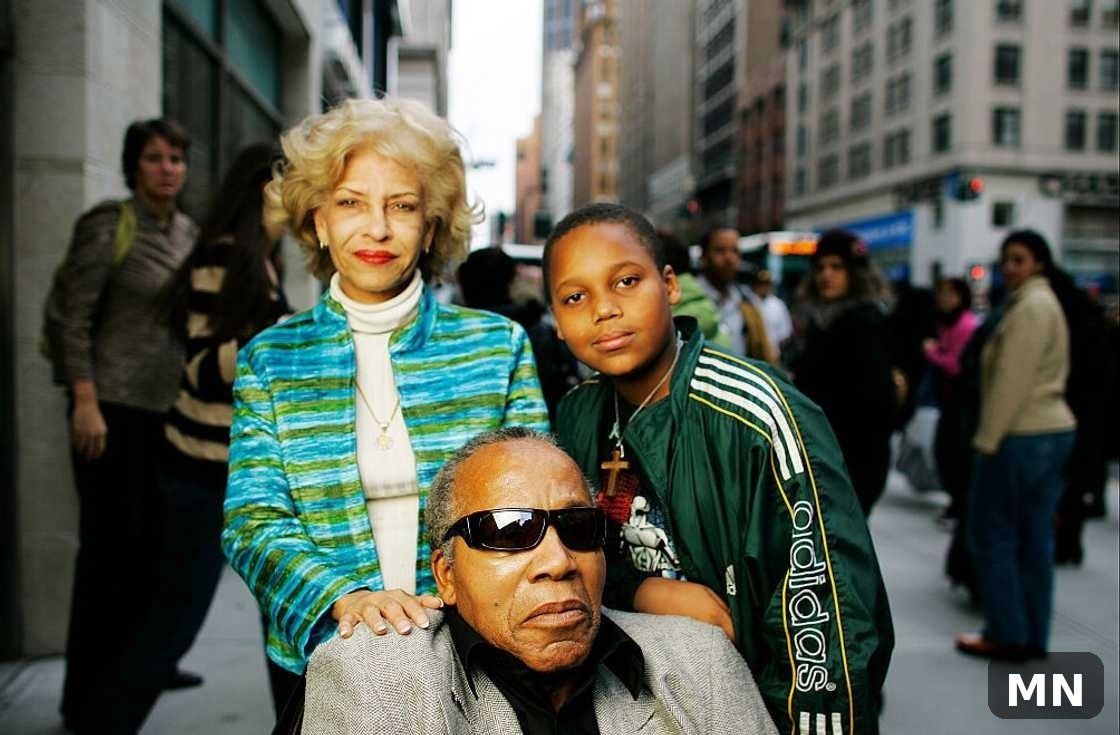
In 2007, Denzel Washington and Ridley Scott brought Frank Lucas to the big screen in American Gangster — and standing beside him in nearly every frame was Eva, the glamorous wife played by Lymari Nadal. The real woman behind that character, Julie Farrait, had a story Hollywood only half told.
But there is much more to the story than the movie version. Julie Farrait’s life moved from modest beginnings in Puerto Rico to the dizzying peak of 1970s Harlem — mink coats, diamonds, and a heroin empire — and then into prison cells, a marriage that fractured and healed, and a second drug arrest when she was nearly seventy. Few lives illustrate so sharply how love, loyalty, and consequence can braid together.
So who was Julie Farrait, really? In this article, we trace what is actually verifiable: her Puerto Rican roots, her marriage to Frank Lucas, her own criminal convictions, what American Gangster got wrong about her, and the quiet later life she chose after it all fell apart.
Quick Bio
| Full Name | Julie Farrait (also reported as Julianna Farrait) |
| Known For | Wife of Harlem drug kingpin Frank Lucas |
| Birth Year | Around 1940–1941 (reported; never confirmed by a primary source) |
| Age (2026) | Approximately 85 |
| Birthplace | Puerto Rico |
| Nationality | Puerto Rican-American |
| Profession | No independently documented career |
| Spouse | Frank Lucas (married 1967; together until his death in May 2019) |
| Children | One daughter publicly documented: Francine Lucas-Sinclair (Frank Lucas had other children from other relationships, per some accounts) |
| Legal History | Served five years in prison for involvement in her husband’s drug enterprise; arrested again in Puerto Rico in 2010 and sentenced to five years |
| Portrayed In | American Gangster (2007) as “Eva,” played by Lymari Nadal |
| Current Status | Living a private life; believed to divide time between Puerto Rico and the United States |
Who Is Julie Farrait?
Julie Farrait was the longtime wife of Frank Lucas, the Harlem drug trafficker who built one of the most notorious heroin empires in American history during the late 1960s and early 1970s. She is the woman the film American Gangster fictionalized as Eva — but the real Julie was more complicated, and in some ways more consequential, than the character on screen.
Unlike her husband, who became a highly visible figure through interviews and his own public accounts of his criminal career, Julie maintained a far lower profile. Her notoriety came from two sources: her marriage to Lucas and her own criminal convictions. Court cases and prison time made her story independently significant — she was not merely a gangster’s wife who happened to be in the room.
Because so many online biographies repeat details without identifying their original sources, parts of her early life remain uncertain. What follows sticks to what the record actually supports.
Early Life in Puerto Rico
Julie Farrait was born in Puerto Rico around 1940 or 1941 and spent her early years in a modest, close-knit island household. Sources describe an upbringing shaped by strong family bonds and the cultural traditions of the island — a world about as far as imaginable from the Harlem streets where she would later make her name.
One detail from those years has been repeated, distorted, and mythologized more than any other: her beauty. Biography.com describes her as a former Puerto Rican homecoming queen, and Frank Lucas himself reportedly used the same term. Somewhere along the way — helped enormously by the film — “homecoming queen” hardened into “Miss Puerto Rico.” It is worth stating plainly: research into the pageant’s records has found no listing for Julie Farrait among its winners. She was admired for her beauty as a young woman; she was not Miss Puerto Rico.
Seeking broader opportunities, she later moved to the United States, a decision that would change everything. The transition from a simple island life to the orbit of one of America’s most notorious criminals began, as these stories so often do, with a meeting.
Meeting Frank Lucas
Julie met Frank Lucas in the 1960s, during a period when Harlem was simultaneously a cultural capital and the hub of an expanding underground economy. Lucas was already rising in New York’s drug trade — confident, charismatic, and visibly wealthy — and their connection deepened quickly into a serious romance.
Accounts of the first meeting vary slightly, with several sources connecting it to travel between Puerto Rico and New York; Lucas traveled to Puerto Rico frequently in those years. What the biographical record agrees on is the outcome: the couple married in 1967, according to multiple accounts, at the very moment Lucas was scaling up the operation that would make him infamous.
The timing mattered. Julie did not marry into a quiet domestic life. She married a man whose growing fortune was inseparable from serious criminal activity — and she would soon become part of that activity herself.
Life at the Top: Harlem’s Glamorous Era
To understand Julie Farrait’s world in the early 1970s, you have to understand Frank Lucas’s innovation. He cut out the middlemen and imported heroin directly from Southeast Asia, building the brand known as “Blue Magic” and a distribution network that generated staggering wealth. At the peak, the money was almost incomprehensible — and Julie lived at the center of it.
She became known as the queen beside the kingpin: mink coats, diamonds, designer wardrobes, luxury cars, and homes that announced the couple’s status to all of Harlem. Their social world blended celebrities, politicians, and entertainers with the constant, low-frequency hum of danger — the knowledge that every display of wealth was also a display to law enforcement.
That tension — opulence built on fragility — is the defining texture of Julie’s years at the top. The glamour was real. So was the fear underneath it.
The Fall: Arrest and Five Years in Prison
The empire collapsed in 1975, when federal agents raided Lucas’s operation and arrested him for large-scale heroin trafficking. Julie was arrested too, charged with participating in the enterprise — and this is one of the best-documented parts of her story. Biography.com reports that she served five years in prison for her involvement.
One account of the couple’s later legal history adds a striking detail: in 1984, Julie and Frank were reportedly charged after attempting to exchange $13,000 and an ounce of heroin for a kilogram of cocaine — a case that drew a seven-year sentence, with release in 1991. Whether every particular of that episode is precisely documented, the pattern it shows is not in dispute: Julie’s entanglement with the drug trade extended well beyond a single bad chapter.
Prison changed the marriage. The couple had lived at the center of a highly visible world of money and danger; incarceration created physical and emotional distance. After her release, Julie reportedly returned to Puerto Rico while Frank rebuilt his own life — and the two lived separately for years.
Separation and Reconciliation
Here is a part of the story the movie never touches: after prison, Julie and Frank Lucas lived apart for a period of years. According to Biography.com, they eventually reconciled in 2006 — a reunion after a separation that might have permanently ended a less stubborn bond.
A 2007 Village Voice account, cited in biographical sources, described the couple as having been married for roughly forty years by that point. Wealth, criminal activity, imprisonment, separation, reconciliation: their relationship survived all of it. That long, complicated history is one reason Julie Farrait remains a subject of fascination even though she never sought anything like her husband’s public profile.
What American Gangster Got Wrong
Ridley Scott’s 2007 film introduced Frank Lucas’s story to a new generation, with Denzel Washington as Lucas and Russell Crowe as detective Richie Roberts. Julie’s counterpart was called Eva and played by Puerto Rican actress Lymari Nadal. But the film should not be treated as a documentary account of Julie’s life.
The clearest distortion is the beauty-queen myth. The movie’s glamorous framing helped cement the impression that Julie had been Miss Puerto Rico. Historical research specifically investigated the claim and found her name absent from the pageant’s winners lists — while Frank Lucas himself reportedly described her as a homecoming queen, not a pageant winner. A detail can become widely “known” simply because it appeared in a popular film.
The movie also compressed and dramatized events for cinematic coherence: timelines tightened, characters composited, edges sanded off. Viewers curious about the real woman should treat Eva as Eva — and Julie Farrait as someone considerably more interesting.
The 2010 Arrest in Puerto Rico
Julie’s legal troubles did not end with the Lucas empire. In 2010, she was arrested in Puerto Rico for attempting to sell cocaine to an undercover officer — and Biography.com reports she was sentenced to five years in prison for it.
The arrest landed hard precisely because of her age: she was around seventy, decades removed from the Harlem years, and the case demonstrated that her connection to drug-related criminal activity had never fully belonged to the past. It complicated any simple redemption narrative and reopened public discussion about how difficult genuine reintegration can be.
Because Julie has largely avoided the spotlight, relatively little reliable information exists about her experience of that second sentence — or about the years since her release.
A Daughter’s Different Path: Francine Lucas-Sinclair
The most publicly documented child of the Lucas family is Francine Lucas-Sinclair, Julie and Frank’s daughter. She grew up in the wreckage of her parents’ choices — wealth, then imprisonment, then the long shadow of notoriety — and as an adult she converted that experience into advocacy.
Francine founded the Yellow Brick Road Foundation, a nonprofit supporting children with incarcerated parents through counseling, education, and community programs. She has spoken publicly about her family’s story to promote awareness and compassion for families affected by the justice system. For more profiles of the families behind famous names, browse our Celebrity section.
Her work reframes the family story. Where her parents’ generation was defined by the drug trade, hers is defined by trying to repair some of its damage — a deliberate, public pivot from crime toward service.
Where Is Julie Farrait Now?
Frank Lucas died on May 30, 2019, at the age of 88. Julie, who had reconciled with him in their later years, outlived the empire, the trials, and the man himself.
Since her release from her second prison sentence, she has chosen a quiet, private life — believed to divide her time between Puerto Rico and the mainland United States, close to family, and far from public attention. At approximately 85, she has lived long enough to see her family’s story become a Hollywood film, a cautionary tale, and — through her daughter’s work — a vehicle for helping others.
What the Internet Gets Wrong About Julie Farrait
A few persistent errors, worth correcting because they rank well on Google:
The Miss Puerto Rico claim: no reliable evidence supports it. She was reportedly a homecoming queen; pageant research contradicts the grander title, which the film popularized.
The name “Eva”: some low-quality pages treat the film character’s name as if it were hers. Her name is Julie Farrait, also reported as Julianna Farrait. Eva exists only in the movie.
The children count: Francine Lucas-Sinclair is the daughter publicly documented as Julie’s. Broader lists of Frank Lucas’s seven children include children from his other relationships — they should not all be attributed to Julie.
Precision presented as fact: sites publish exact birth dates and net-worth figures for her without citing any original source. Her birth year is commonly reported as circa 1940–1941, and that is as precise as the record honestly gets.
Frequently Asked Questions
Who is Julie Farrait?
Julie Farrait was the longtime wife of Frank Lucas, the Harlem heroin trafficker of the late 1960s and early 1970s. She participated in his criminal enterprise, served five years in prison, was arrested again in Puerto Rico in 2010, and inspired the character Eva in American Gangster.
Did Julie Farrait go to prison?
Yes, twice. She served five years in the aftermath of the 1970s investigation into Frank Lucas’s empire, and she was sentenced to another five years after her 2010 arrest in Puerto Rico for attempting to sell cocaine to an undercover officer.
Was Julie Farrait really Miss Puerto Rico?
No reliable evidence supports the claim. Research into pageant records found no listing for her, and Frank Lucas himself reportedly described her as a homecoming queen. The grander title was popularized by the film American Gangster.
Was Julie Farrait portrayed in American Gangster?
Her character was fictionalized as “Eva” and played by Lymari Nadal. The film compressed and dramatized real events, so it should not be treated as an accurate biography.
How many children did Julie Farrait have?
One daughter is publicly documented as Julie’s: Francine Lucas-Sinclair, who founded the Yellow Brick Road Foundation. Broader counts of Frank Lucas’s children include children from his other relationships.
Is Julie Farrait still alive?
As of the latest reliable reports, yes. She has lived a private life since her release from her second prison sentence, believed to split her time between Puerto Rico and the United States.
Bottom Line
Julie Farrait’s life reads like three different stories: the Puerto Rican homecoming queen who married a kingpin, the glamorous partner at the peak of a criminal empire, and the twice-convicted woman who kept getting pulled back into the world she had tried to leave. Hollywood picked the most cinematic version and called it Eva.
The real version is less glamorous and more human — a story about how love and loyalty can carry a person into catastrophe, how consequences compound across decades, and how even the most public downfall can end in chosen obscurity. Behind every crime saga, there are personal stories of hardship, choice, and the long attempt to rebuild. Julie Farrait’s is one of the most instructive of them all.
